


NEWS.
Yongsheng Medical-specializing in medical consumables
What are the methods and techniques for using the tourniquet?
Data: 2022-08-08
What are the methods and techniques for using the tourniquet?
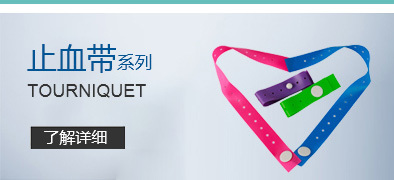
The purpose of pressurizing the pulse band during blood collection is to increase local filling, which is beneficial to improve the success rate. So what are the methods and techniques of pressure pulse area?
The correct operation of the tourniquet is: tighten firsttourniquetObserve the direction of blood vessels and loosen them in time.tourniquet, and then disinfect, tighten again beforepressure pulseTake, and immediately take blood, which is very important for the detection of coagulation items, and strive to complete within 1 minute. Pressure tourniquet compression should not be too long or too tight. If the long tourniquet, blood reflux is blocked, blood vessels dilate, blood pressure increases, blood flow decreases, resulting in fluid loss. So if the tourniquet pressure is not long, water can be transferred from the blood vessels to the tissue, but large molecules and particles (cells) can not be filtered, the blood will be concentrated. It can also promote fibrinolysis or accelerate platelet activation to increase fibrin activity. Therefore, the pulse band should be less than 1 minute, and it is appropriate to enter the blood vessel to loosen the pulse band after entering the needle. When the pulse area was pressed for more than 1 min, the local blood oxygen content decreased, the lactic acid increased, and the pH value decreased. Press for 3 minutes, bilirubin, cholesterol, AST, alkaline phosphatase, etc. It can be increased by more than 5%. Therefore, when taking blood, the compression of the pulse belt should be controlled as much as possible, which can not only improve the success rate, but also reduce unnecessary pain and make the test results more accurate.
PressuretourniquetPrecautions for application: do a good job in nursing safety assessment, such as the elderly who can't speak, slow response, coma, sedation and other special groups, are high-risk groups of nursing safety management. In the application of pressure pulse belt, should be particularly vigilant and care for these. When the belt is carried out, the parts should be fully exposed to avoid clothing or other articles covering the belt, so as not to forget to bring the belt on the body. After each operation, carefully count the number of pressure pulse areas and deal with them. Abide by hospital infection management regulations to avoid hospital infection: one person once, disinfection or disposable tourniquet. During the process, strengthen the inspection and closely observe the situation (such as whether the part is swollen, whether the needle is prolapsed/blocked/extravasated, etc.). Observe the patient's response. Listen to the chief complaint and observe the patient's reaction. In case the child cries, carefully find out the cause of the crying and investigate the hidden dangers. Pay attention to the interruption events in the process of nursing operation, do a good job of handover and avoid mistakes. Fulfill the obligation to inform and assist their families. For example, when giving the patient, help the patient to pose, and be careful not to expose the injected limb in winter to avoid catching cold.
Methods and precautions for correctly binding pressure belts during blood collection: when rubber pulse pressure belts are used, it is necessary to evaluate whether there is a history of latex allergy, and rubber pulse pressure belts are not suitable for those with a history of allergy. The blood pressure band is 7-10cm above the blood collection point. After wrapping the arm for a week, tie a loose knot at the end of the blood pressure band, but do not tie it. Compression pulse zone ligation should not exceed 1 minute. Excess length can lead to hemolysis, hematocrit and false elevation of protein test results. The tourniquet should be one person. If repeated, please after disinfection.
Related News
Understanding Button Style Tourniquets: Essential Insights for Medical Professionals
Button style tourniquets are specially designed devices used in medical emergencies to control severe bleeding from limbs. They play a crucial role in pre-hospital care and trauma management, especially in scenarios where rapid intervention can mean the difference between life and death. Understanding the characteristics and appropriate usage of button style tourniquets is essential for healthcare
12-09
2025
A Comprehensive Guide to Selecting the Best Rubber Tourniquet for Medical Use
A Comprehensive Guide to Selecting the Best Rubber Tourniquet for Medical Use In the fast-paced world of emergency medicine, having the right tools at our disposal can make all the difference in saving lives. One such essential tool is the rubber tourniquet, a device critical for controlling severe bleeding. Understanding how to select the best rubber tourniquet can enhance patient outcomes during
12-08
2025
Advancing Clinical Safety and Efficiency with TPE Disposable Tourniquets
TPE disposable tourniquet offers soft, latex-free elasticity, ensuring secure vessel compression, patient comfort, and single-use hygiene for clinical procedures.
12-08
2025
Understanding Snap-on Tourniquets: Essential Tools for Emergency Hemostasis
The Snap-on tourniquet is a specialized medical device designed to provide rapid hemorrhage control in situations where traditional methods may be insufficient. Its design allows for quick application, which is critical in emergencies where time is of the essence. The core mechanism involves a simple yet effective setup that ensures a secure fit around a limb, thereby occluding blood flow to the i
12-07
2025
Boosting Your Yoga Practice: The Impact of Tension Bands on Performance
Boosting Your Yoga Practice: The Impact of Tension Bands on Performance Table of Contents 1. Introduction: Understanding Tension Bands in Yoga 2. The Benefits of Incorporating Tension Bands in Your Yoga Routine 2.1 Enhancing Flexibility 2.2 Building Strength 2.3 Improving Balance and Stability 3. How Tension Bands Transform Various Yoga Poses 3.1 Using Tension Bands for Warrior Poses 3.2 Enhancing
12-06
2025
Understanding the Fish Bone Tourniquet: A Crucial Tool for Hemostasis
The Fish Bone Tourniquet is a specialized medical device used to control severe bleeding in trauma situations. Its unique design, resembling a fish bone, allows for efficient application and adjustment, making it a preferred choice among first responders and medical personnel. The primary function of this tourniquet is to occlude blood flow to a limb, thereby preventing excessive blood loss until
12-05
2025
Service Hotline
Qidong Yongsheng Medical Products Factory.
Add: No.9, Yuelong East Road, Science and Technology Pioneer Park, Qidong City, Jiangsu Province
Contact: Mr. Wu 86-18962899151
E-mail: yongsheng@jsyongsheng.com