


NEWS.
Yongsheng Medical-specializing in medical consumables
The use of tourniquet points, disposable tourniquet manufacturers for you to dispel doubts
Data: 2022-06-28
Disposable tourniquetManufacturers believe that the tourniquet was once forgotten. One would think that with today's medical methods, there are naturally more advanced methods of hemostasis, and such backward tourniquets are no longer needed. However, this is not the case, and tourniquets are still widely used in orthopedic and other surgeries.
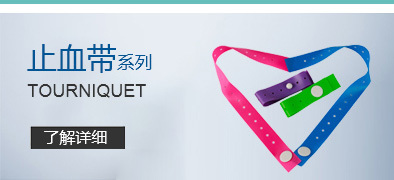
Disposable tourniquetManufacturers believe that the use of tourniquets can temporarily block the blood supply to the limbs, help provide a bloodless surgical field and reduce the amount of bleeding during surgery. However, a large number of studies have shown that if the tourniquet is used improperly, it is easy to cause physical disability. Therefore, the key to the clinical application of tourniquet is to strictly grasp the indications and standardize the use.
Disposable tourniquetManufacturers believe that the current clinical use of tourniquet is an electronically controlled pneumatic tourniquet. Generally installed on a small shelf, can be moved at any time, very convenient to use. When in use, set the pressure and time as needed. After that, the air pump quickly sucks the air,
Disposable tourniquet manufacturers believe that when the pressure reaches the set value, the pump will automatically stop. When there is a slight air leak in the system, the air pump will replenish air in time; when the cuff pressure changes due to changes in the position of the limb, deflate or replenish air at any time to provide the balance pressure of the tourniquet; the time will be automatically timed after the time is set, and the remaining 10 minutes, 5 minutes, and 1 minute will be automatically prompted. At this time, the surgeon should make some preparations to loosen the tourniquet according to the current operation progress.
Disposable tourniquet manufacturers believe that tourniquets cannot be used all the time, mainly to avoid limb ischemia-reperfusion injury or ischemic necrosis. In addition, tourniquets can cause complications such as tissue damage or nerve damage. Therefore, choosing the right tourniquet is also a science:
Width: disposable tourniquet manufacturers believe that the choice of length and width of the appropriate tourniquet, tourniquet as far as possible to choose a wide. Because the contact area between the wide tourniquet and the skin increases, it can provide hemostasis with less pressure, and because the pressure on the tourniquet and marginal nerves is less, it reduces the damage to the nerves and soft tissues, such as abrasions, Blisters, sprains, skin necrosis and other complications.
The position of the tourniquet is very important: disposable tourniquet manufacturers believe that the correct position of the inflatable tourniquet should be the upper limb in the upper arm 1/3, and the lower limb in the root of the thigh near the groin. Should not be close to the bones or superficial major nerves, so as not to cause damage.
Disposable tourniquet manufacturers believe that the pressure and duration of tourniquet has been the focus of scholars' research. The greater the pressure, the narrower the cuff, the longer the duration, the more serious the injury. The body's subcutaneous fat and muscle tissue also consume tourniquet pressure, so the pressure should be individualized, according to the patient's age, systolic blood pressure, tourniquet width, limb circumference to determine. Too much pressure will cause nerve damage and tissue necrosis, and increase the occurrence of adverse reactions of tourniquet; if the pressure is too low, it can only block venous blood flow, not arterial blood flow, not only can not stop bleeding, but also cause limb congestion and increase surgical field bleeding.
Related News
Understanding Button Style Tourniquets: Essential Insights for Medical Professionals
Button style tourniquets are specially designed devices used in medical emergencies to control severe bleeding from limbs. They play a crucial role in pre-hospital care and trauma management, especially in scenarios where rapid intervention can mean the difference between life and death. Understanding the characteristics and appropriate usage of button style tourniquets is essential for healthcare
12-09
2025
A Comprehensive Guide to Selecting the Best Rubber Tourniquet for Medical Use
A Comprehensive Guide to Selecting the Best Rubber Tourniquet for Medical Use In the fast-paced world of emergency medicine, having the right tools at our disposal can make all the difference in saving lives. One such essential tool is the rubber tourniquet, a device critical for controlling severe bleeding. Understanding how to select the best rubber tourniquet can enhance patient outcomes during
12-08
2025
Advancing Clinical Safety and Efficiency with TPE Disposable Tourniquets
TPE disposable tourniquet offers soft, latex-free elasticity, ensuring secure vessel compression, patient comfort, and single-use hygiene for clinical procedures.
12-08
2025
Understanding Snap-on Tourniquets: Essential Tools for Emergency Hemostasis
The Snap-on tourniquet is a specialized medical device designed to provide rapid hemorrhage control in situations where traditional methods may be insufficient. Its design allows for quick application, which is critical in emergencies where time is of the essence. The core mechanism involves a simple yet effective setup that ensures a secure fit around a limb, thereby occluding blood flow to the i
12-07
2025
Boosting Your Yoga Practice: The Impact of Tension Bands on Performance
Boosting Your Yoga Practice: The Impact of Tension Bands on Performance Table of Contents 1. Introduction: Understanding Tension Bands in Yoga 2. The Benefits of Incorporating Tension Bands in Your Yoga Routine 2.1 Enhancing Flexibility 2.2 Building Strength 2.3 Improving Balance and Stability 3. How Tension Bands Transform Various Yoga Poses 3.1 Using Tension Bands for Warrior Poses 3.2 Enhancing
12-06
2025
Understanding the Fish Bone Tourniquet: A Crucial Tool for Hemostasis
The Fish Bone Tourniquet is a specialized medical device used to control severe bleeding in trauma situations. Its unique design, resembling a fish bone, allows for efficient application and adjustment, making it a preferred choice among first responders and medical personnel. The primary function of this tourniquet is to occlude blood flow to a limb, thereby preventing excessive blood loss until
12-05
2025
Service Hotline
Qidong Yongsheng Medical Products Factory.
Add: No.9, Yuelong East Road, Science and Technology Pioneer Park, Qidong City, Jiangsu Province
Contact: Mr. Wu 86-18962899151
E-mail: yongsheng@jsyongsheng.com