

Synthetic rubber tourniquet
Release Date:
2025-01-23
In medical emergency and some medical operation scenarios, tourniquets play a vital role, and Synthetic rubber tourniquet stands out with its many advantages.

In medical emergency and some medical operation scenarios, tourniquets play a vital role, and Synthetic rubber tourniquet stands out with its many advantages.
1. Material properties
Advantages of synthetic rubber
Synthetic rubber has good elasticity. This elasticity allows the tourniquet to be easily wrapped around the limb, and when appropriate pressure is applied, it can fit closely to the skin surface and effectively block blood flow. Compared with some traditional materials, it will not slide or shift easily, thus ensuring the stability of the hemostatic effect.
It has strong wear resistance. In a medical environment, the tourniquet may undergo multiple uses, disinfection and other operations. The wear resistance of synthetic rubber enables it to withstand these tests, and it is not easy to break or break, which prolongs the service life of the tourniquet.
Synthetic rubber is less irritating to the skin. This is especially important for situations where the tourniquet needs to be used for a long time, such as during a long operation or field emergency, so that allergies or excessive skin reactions will not be caused by the contact between the tourniquet and the skin.
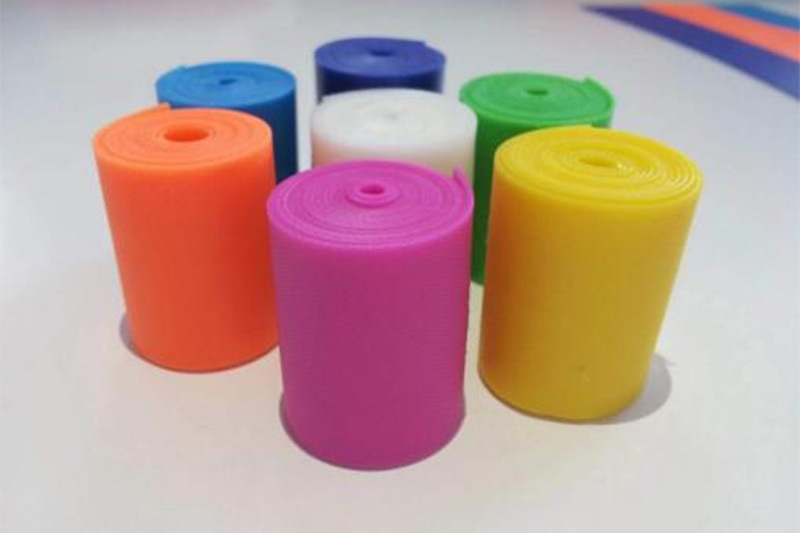
2. Design and Function
Size and Adjustability
Synthetic rubber tourniquet is usually available in a variety of sizes to suit patients of different ages and body shapes. Whether it is an adult's thick arms or legs, or a child's slender limbs, you can find a suitable tourniquet. Moreover, it generally uses a convenient adjustment device, such as Velcro or a special buckle, so that medical staff can quickly and accurately adjust the tightness of the tourniquet according to actual needs to ensure the best hemostatic pressure.
Marking and Visibility
There are often clear scale markings on the tourniquet, which helps medical staff to accurately control the scope of use and pressure of the tourniquet. At the same time, some tourniquets use eye-catching colors, which are easy to identify in medical environments, making it easy to find and use them quickly in emergency situations.
3. Safety and Hygiene
Easy to Disinfect
Synthetic rubber materials are easy to disinfect. Common disinfection methods can be used, such as high-temperature steam disinfection, chemical disinfectant immersion, etc., which can effectively kill bacteria, viruses and other pathogens, ensure the safety of the tourniquet every time it is used, and prevent cross infection.
Safety guarantee
During use, the Synthetic rubber tourniquet can stably maintain hemostatic pressure and reduce the risk of complications caused by unstable pressure. At the same time, when it is necessary to release hemostasis, it can also be relaxed smoothly to avoid adverse situations such as sudden and large-scale blood reflux.
IV. Wide range of application scenarios
Medical first aid
In sudden traumatic bleeding events, such as traffic accidents and construction site accidents, the Synthetic rubber tourniquet is one of the first hemostatic tools used by first aid personnel on the scene. It can quickly control limb bleeding and buy precious time for subsequent medical transfer and treatment.
Hospital surgery
In the operating room, whether it is general surgery, orthopedics or other departments that require limb surgery, the Synthetic rubber tourniquet is a commonly used auxiliary device. It helps doctors create a clear surgical field of view, reduce intraoperative bleeding, and improve the safety and success rate of surgery.
More application knowledge
Service Hotline
Qidong Yongsheng Medical Products Factory.
Add: No.9, Yuelong East Road, Science and Technology Pioneer Park, Qidong City, Jiangsu Province
Contact: Mr. Wu 86-18962899151
E-mail:yongsheng@jsyongsheng.com

Mobile Site


